AI for Healthcare
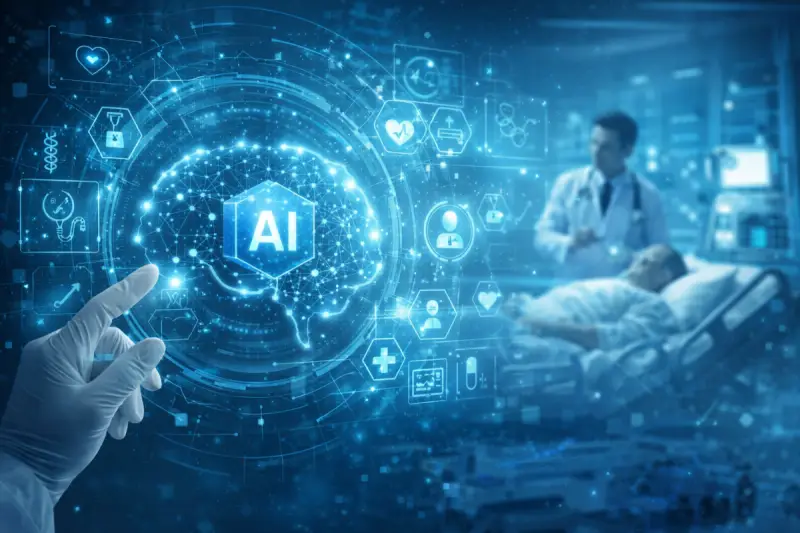
Explore how Artificial Intelligence is transforming healthcare through smarter diagnostics, medical research, hospital automation, and improved patient care technologies.
Explore how Artificial Intelligence is transforming healthcare through smarter diagnostics, medical research, hospital automation, and improved patient care technologies.
Artificial Intelligence is rapidly transforming the healthcare industry across the United States and around the world. Hospitals, research centers, and medical professionals are increasingly using advanced AI technologies to analyze large volumes of medical data, detect diseases earlier, and improve the overall quality of patient care. With the ability to process complex medical information within seconds, AI systems can support doctors in making faster and more accurate clinical decisions. From medical imaging analysis to intelligent patient monitoring, modern healthcare is becoming more efficient, data-driven, and responsive than ever before.
One of the most powerful advantages of Artificial Intelligence in healthcare is its ability to identify patterns that may not be visible to the human eye. AI-powered diagnostic systems can help detect conditions such as cancer, heart disease, and neurological disorders at earlier stages, giving doctors more time to create effective treatment plans. At the same time, machine learning models are being used to analyze electronic health records, predict patient risks, and personalize medical treatments based on individual health data.
Beyond diagnostics, AI is also helping hospitals streamline operations and reduce administrative work. Intelligent systems can automate tasks such as appointment scheduling, medical documentation, billing analysis, and patient data management. By reducing repetitive manual processes, healthcare professionals can spend more time focusing on what truly matters — providing high-quality care and building stronger relationships with patients.
As healthcare technology continues to evolve, Artificial Intelligence is expected to play an even greater role in shaping the future of medicine. From accelerating drug discovery and supporting clinical research to enabling remote patient monitoring and digital health services, AI is opening new possibilities for innovation in the healthcare ecosystem. In the coming years, intelligent healthcare systems will not only improve efficiency but also help create a safer, smarter, and more accessible medical environment for people everywhere.
Healthcare organizations across the United States are adopting advanced Artificial Intelligence tools to improve diagnostics, medical research, and patient care. Below are some of the most powerful AI platforms used by hospitals, healthcare startups, and medical professionals.

IBM Watson Health uses Artificial Intelligence to analyze large medical datasets, support clinical decision making, and accelerate medical research for hospitals and healthcare institutions.

Tempus AI focuses on precision medicine by using data analytics and machine learning to help doctors provide personalized treatment plans for cancer and other complex diseases.

PathAI develops AI-powered pathology tools that help doctors detect diseases more accurately and improve clinical research for hospitals and biotechnology companies.

Aidoc provides AI-powered medical imaging solutions that help radiologists detect critical conditions such as strokes and brain injuries faster and more accurately.

Google DeepMind develops advanced AI models that help medical researchers analyze healthcare data and improve diagnosis for complex diseases.
Artificial Intelligence is transforming the healthcare industry by helping doctors analyze medical data, detect diseases earlier, and improve treatment planning. AI powered systems are now widely used in hospitals, clinics, and research institutions to improve patient outcomes and healthcare efficiency.
AI systems can analyze medical images such as X-rays, MRIs, and CT scans to detect diseases like cancer and heart conditions earlier than traditional methods. Early diagnosis allows doctors to begin treatment sooner and improve patient survival rates.
Machine learning algorithms can analyze large amounts of patient data and medical records to help doctors identify patterns and make more accurate diagnoses. This improves clinical decision making.
AI powered monitoring tools can track patient health in real time using wearable devices and smart systems. Healthcare providers can respond quickly if a patient’s condition changes.
AI is helping pharmaceutical companies analyze biological data and identify potential medicines much faster than traditional research methods.
Artificial Intelligence is rapidly improving healthcare systems across the world. From medical diagnosis to drug discovery, AI technologies are helping doctors, researchers, and hospitals improve patient outcomes and reduce operational costs.
| Healthcare Area | AI Technology Used | Impact on Healthcare | Improvement Level |
|---|---|---|---|
| Medical Imaging | Deep Learning, Computer Vision | Helps detect cancer and diseases earlier using MRI and X-ray analysis | 85% |
| Patient Monitoring | AI Sensors, Wearable Devices | Tracks patient health in real-time and alerts doctors automatically | 74% |
| Drug Discovery | Machine Learning, Data Analysis | Speeds up the process of discovering new medicines and treatments | 65% |
| Hospital Automation | AI Automation Systems | Improves hospital workflow and reduces administrative workload | 68% |
| Clinical Decision Support | Predictive AI Models | Helps doctors make more accurate treatment decisions | 72% |

AI enables personalized treatment plans by analyzing patient data, genetics, and medical history. Doctors can provide more accurate treatments based on individual health patterns.
Robotic systems powered by AI assist surgeons during complex operations. These systems improve precision and reduce surgical risks.
AI can analyze patient data to predict diseases before symptoms appear. This helps doctors prevent serious health conditions earlier.

IBM Watson Health uses artificial intelligence to analyze medical data, assist doctors with diagnosis, and improve treatment planning.
Try This AI
Google Health develops AI technologies for disease detection, medical imaging analysis, and improving healthcare outcomes.
Try This AI
PathAI uses machine learning to help pathologists analyze tissue samples and improve disease diagnosis accuracy.
Try This AI
Tempus provides AI-powered precision medicine and helps doctors make data-driven treatment decisions.
Try This AI
Butterfly Network develops AI-powered ultrasound devices that help doctors diagnose medical conditions faster.
Try This AI
Aidoc uses artificial intelligence to analyze medical scans and help radiologists detect critical conditions faster.
Try This AI