Hello readers, I’m really glad you’re here. In today’s fast-changing world, technology is playing a big role in improving our daily lives, especially in healthcare. Through this article, I’ve tried to share simple and useful insights about how AI is transforming the medical field.
I hope this guide helps you understand things more clearly and gives you real value.
Artificial Intelligence (AI) is transforming the healthcare industry in 2026. It helps doctors and medical professionals make faster and more accurate decisions. AI-powered tools are now being used to analyze patient data, detect diseases early, and improve treatment outcomes.
In healthcare, AI is widely used for diagnosis, medical imaging, and treatment planning. These tools can quickly process large amounts of data, reducing human error and saving valuable time. This leads to better patient care and more efficient hospital operations.
As technology continues to grow, AI is becoming an essential part of modern healthcare systems. In this article, we will explore the best AI tools in healthcare that are improving diagnosis and patient care in 2026.
What is AI in Healthcare?
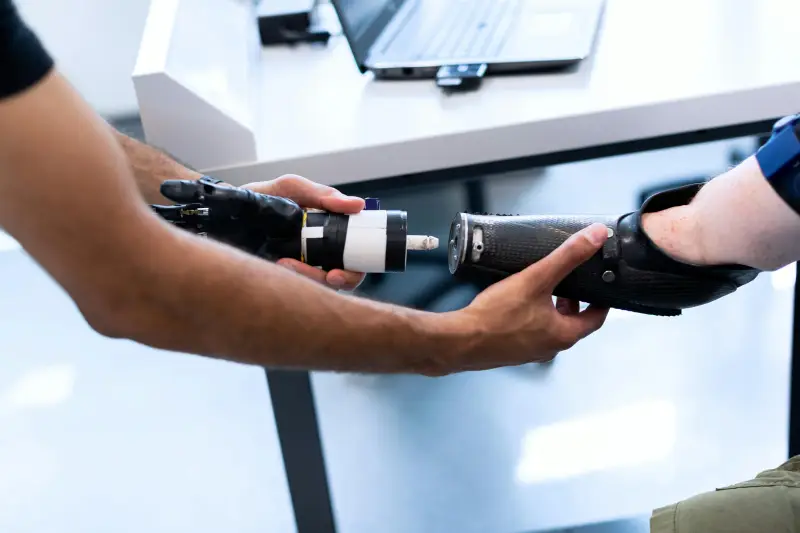
AI in healthcare refers to the use of intelligent computer systems that can analyze medical data, learn from patterns, and assist doctors in making better decisions. These systems are designed to process large amounts of information such as patient records, lab reports, and medical images much faster than a human can. Instead of replacing doctors, AI acts as a support tool that helps improve accuracy, reduce workload, and speed up the decision-making process.
In simple terms, AI works by identifying patterns in data and using that information to predict outcomes or suggest possible diagnoses. For example, if an AI system is trained on thousands of medical scans, it can quickly recognize signs of diseases like cancer, heart problems, or infections. This helps doctors detect conditions at an early stage, which can be critical for successful treatment.
In real-life healthcare settings, AI is already being used in many ways. Hospitals use AI-powered tools to analyze X-rays, CT scans, and MRIs with high precision. Some systems can monitor patients in real time and send alerts to doctors if there are sudden changes in vital signs. AI is also used in managing electronic health records, reducing paperwork, and improving hospital efficiency. Overall, AI is helping healthcare become more accurate, faster, and more patient-focused.
Top AI Tools in Healthcare (2026)
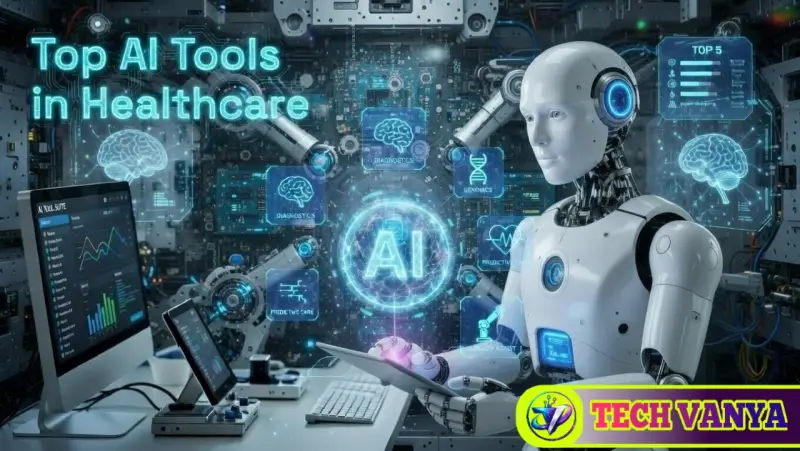
Artificial intelligence is becoming a core part of modern healthcare systems. In 2026, hospitals and medical institutions are using AI tools not just to assist doctors, but to improve the entire patient care process. From early diagnosis to treatment planning, these tools help in reducing errors, saving time, and delivering better outcomes. Below are some of the most powerful AI tools that are currently making a real impact in healthcare.
1. IBM Watson Health
- IBM Watson Health is a powerful AI platform that helps doctors analyze complex medical data and make better clinical decisions. It can process patient records, research papers, and treatment histories to provide useful insights in seconds.
- Use Case: Widely used in cancer diagnosis and treatment planning, where it suggests possible therapies based on patient data and global research.
- Best For: Clinical decision support, personalized treatment, and handling large-scale medical data.
- Key Features:
- Advanced data analysis using AI
- Personalized treatment recommendations
- Integration with hospital systems
- Real-time insights for doctors
2. Google DeepMind
- Google DeepMind uses deep learning technology to solve complex healthcare problems. It is highly effective in analyzing medical images and detecting diseases at an early stage with high accuracy.
- Use Case: Used for detecting eye diseases, kidney issues, and neurological conditions through medical imaging.
- Best For: Medical imaging, predictive healthcare, and research-based analysis.
- Key Features:
- Deep learning-based diagnosis
- High accuracy in image analysis
- Continuous learning from new data
- Predictive analytics capabilities
3. PathAI
- PathAI is designed to improve the accuracy of pathology by using artificial intelligence to analyze lab samples. It helps doctors detect diseases more reliably and reduces errors in diagnosis.
- Use Case: Used in laboratories for analyzing tissue samples and detecting diseases like cancer.
- Best For: Pathology diagnostics and lab-based disease detection.
- Key Features:
- Machine learning-based pathology analysis
- Improved diagnostic accuracy
- Faster lab result processing
- Data-driven medical insights
4. Tempus
- Tempus focuses on precision medicine by collecting and analyzing clinical and molecular data. It helps doctors choose the most effective treatment based on individual patient data.
- Use Case: Used in cancer care and research for personalized treatment planning.
- Best For: Precision medicine and data-driven healthcare decisions.
- Key Features:
- Genomic data analysis
- Clinical and molecular data integration
- AI-powered treatment recommendations
- Personalized healthcare solutions
5. Aidoc
- Aidoc helps radiologists detect critical conditions faster by analyzing medical images in real time. It reduces the time needed to identify serious issues and improves emergency response.
- Use Case: Used in radiology for detecting conditions like brain hemorrhage, lung problems, and fractures.
- Best For: Medical imaging and emergency diagnosis.
- Key Features:
- Real-time alerts for critical findings
- AI-powered imaging analysis
- Improved workflow efficiency
- Fast and accurate diagnosis support
6. Zebra Medical Vision
- Zebra Medical Vision provides AI-based imaging solutions that help doctors detect various diseases quickly and accurately. It reduces workload and improves diagnostic efficiency.
- Use Case: Used for detecting liver diseases, lung conditions, and cardiovascular issues through imaging data.
- Best For: Medical imaging analytics and automated disease detection.
- Key Features:
- Automated image analysis
- Cloud-based AI platform
- Scalable healthcare solutions
- High diagnostic accuracy
7. Buoy Health
- Buoy Health is an AI-powered tool that helps patients understand their symptoms and guides them on what to do next. It acts like a virtual assistant for basic health queries.
- Use Case: Used by patients to check symptoms and decide whether to visit a doctor.
- Best For: Initial diagnosis support and patient guidance.
- Key Features:
- AI-based symptom checker
- Personalized health recommendations
- Easy and user-friendly interface
- Reduces unnecessary hospital visits
AI Tools Comparison in Healthcare (2026)
With so many AI tools available in healthcare, choosing the right one can be confusing. Each tool has its own strengths, depending on how it is used in hospitals, labs, or patient care. The table below gives a simple comparison of the most popular AI tools based on their usage, purpose, and pricing.
| Tool | Use | Best For | Pricing |
|---|---|---|---|
| IBM Watson Health | Analyzing patient data and suggesting treatments | Cancer diagnosis and clinical decision support | Custom pricing (enterprise-level) |
| Google DeepMind | Medical imaging and disease detection | Eye diseases, predictive analysis | Custom / research-based access |
| PathAI | Analyzing lab samples using AI | Pathology diagnostics | Custom pricing |
| Tempus | Clinical and genomic data analysis | Precision medicine | Custom pricing |
| Aidoc | Real-time medical image analysis | Radiology and emergency diagnosis | Subscription-based |
| Zebra Medical Vision | AI-based imaging insights | Disease detection through scans | Subscription-based |
| Buoy Health | Symptom checking and patient guidance | Initial diagnosis support | Free + premium options |
Benefits of AI in Healthcare
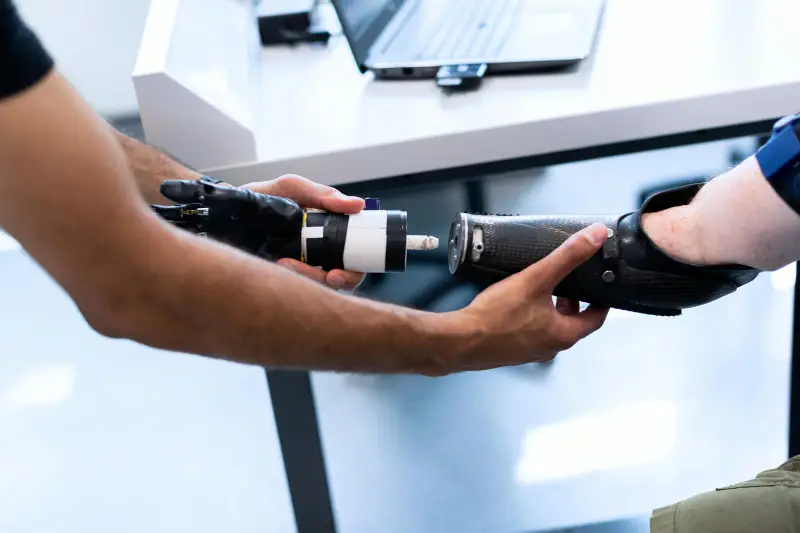
Artificial Intelligence is bringing significant improvements to the healthcare industry by making processes faster, more accurate, and more efficient. It helps doctors, hospitals, and even patients by reducing manual work and improving decision-making. From early diagnosis to better treatment planning, AI is playing an important role in modern healthcare systems. Below are some of the key benefits of using AI in healthcare.
- Fast Diagnosis
- Cost Reduction
- Accuracy Improvement
- Time Saving
Fast Diagnosis: AI tools can quickly analyze medical data such as reports, scans, and patient history within seconds. This helps doctors detect diseases at an early stage and start treatment faster, which can improve patient outcomes.
Cost Reduction: By automating many tasks and reducing the need for manual work, AI helps hospitals lower operational costs. It also reduces unnecessary tests and procedures, saving money for both healthcare providers and patients.
Accuracy Improvement: AI systems are trained on large datasets, which allows them to identify patterns and detect diseases with high accuracy. This reduces the chances of human error and leads to better diagnosis and treatment decisions.
Time Saving: AI automates repetitive tasks such as data entry, report analysis, and patient monitoring. This saves time for doctors and medical staff, allowing them to focus more on patient care instead of administrative work.

Challenges and Risks of AI in Healthcare
While AI is bringing many advantages to healthcare, it also comes with certain challenges and risks that cannot be ignored. Healthcare is a sensitive field where even small mistakes can have serious consequences. That is why it is important to understand the limitations of AI and use it carefully along with human expertise. Below are some of the major challenges associated with AI in healthcare.
- Data Privacy Issues
- High Cost
- Dependence on AI
Data Privacy Issues: AI systems require large amounts of patient data to work effectively. This includes sensitive information such as medical history, test reports, and personal details. If this data is not properly protected, it can lead to privacy breaches and misuse of information.
High Cost: Implementing AI in healthcare requires advanced technology, infrastructure, and skilled professionals. This makes it expensive for many hospitals, especially smaller ones, to adopt AI systems. The initial setup and maintenance costs can be a major challenge.
Dependence on AI: Over-reliance on AI can reduce human involvement in decision-making. While AI can assist doctors, it should not completely replace human judgment. There is always a risk if doctors depend too much on AI without proper verification.
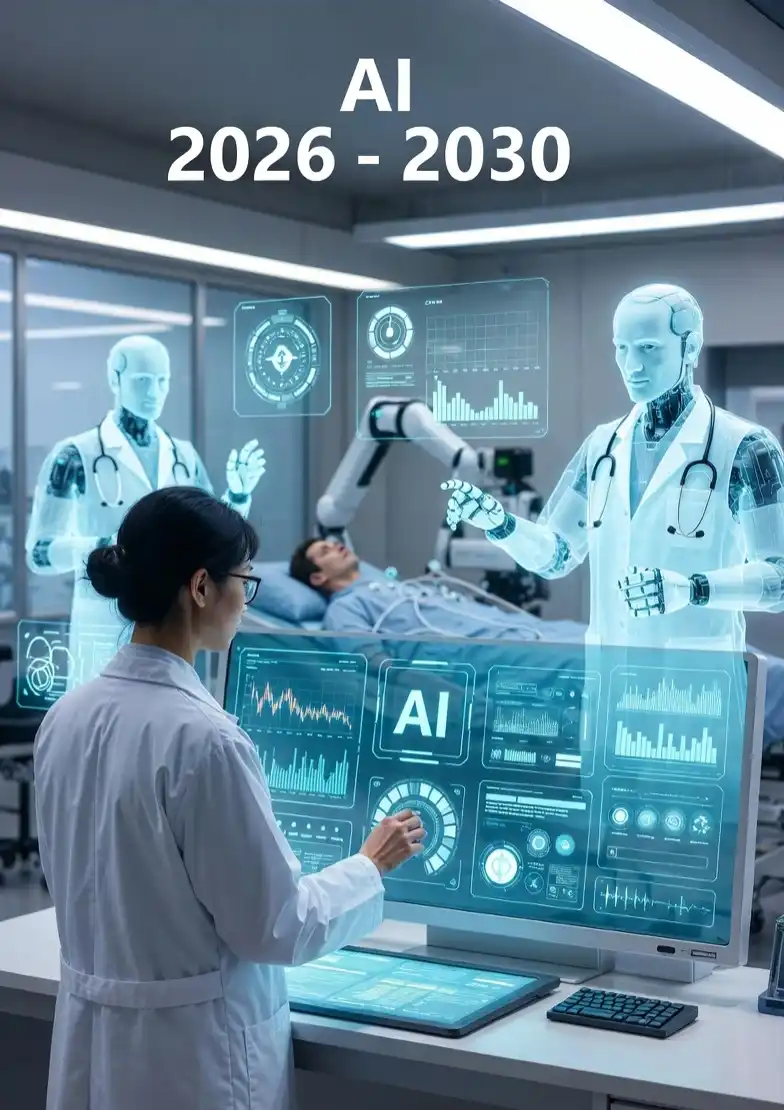
Future of AI in Healthcare (2026–2030)
The future of AI in healthcare looks very promising as technology continues to evolve rapidly. Between 2026 and 2030, AI is expected to become more advanced, accessible, and deeply integrated into everyday medical practices. It will not only support doctors but also improve how patients receive care. With better data, smarter algorithms, and improved infrastructure, AI will play a key role in shaping the next generation of healthcare systems.
- AI Doctors
- Remote Treatment
- Automation Growth
AI Doctors: In the coming years, AI-powered systems may act as virtual doctors that can provide basic consultations and health advice. These systems will be able to analyze symptoms, suggest treatments, and guide patients, especially in areas where medical professionals are not easily available. However, they will still work alongside human doctors rather than replace them.
Remote Treatment: AI will make remote healthcare more effective by enabling real-time monitoring and virtual consultations. Patients will be able to receive treatment from their homes through smart devices and AI-driven platforms. This will be especially helpful for people living in rural or remote areas.
Automation Growth: Many routine tasks in healthcare, such as data entry, report generation, and patient monitoring, will become fully automated with AI. This will reduce workload for medical staff and improve overall efficiency in hospitals and clinics.

Final Thoughts
Artificial Intelligence is clearly transforming the healthcare industry in 2026. From faster diagnosis to better treatment planning, AI tools are helping doctors and hospitals deliver more accurate and efficient care. These technologies are not only improving patient outcomes but also reducing workload and saving valuable time in medical processes.
As AI continues to grow, its role in healthcare will become even more important in the coming years. With advancements in technology and wider adoption, we can expect smarter systems, better accessibility, and improved healthcare services for people around the world. While challenges still exist, the future of AI in healthcare looks highly promising and full of opportunities.