What is IBM? (2026 Overview)
IBM, or International Business Machines Corporation, is one of those rare tech companies that has been around for over a century and still remains incredibly relevant in 2026. Founded in 1911 in the United States, it started life making tabulating machines and punch-card systems — basically the ancestors of modern data processing. Over the decades, IBM played a huge role in building the digital world we live in today: from the first commercial computers in the 1950s to helping put astronauts on the moon, and now powering AI and cloud solutions for the biggest companies on the planet.
Headquartered in Armonk, New York, IBM has never been a consumer-facing brand like Apple or Google. Instead, it has always focused on serious enterprise-level technology — the kind that runs banks, airlines, hospitals, governments, and massive supply chains behind the scenes. In 2026, if you ask most people what IBM is famous for, they’ll probably say **IBM Watson** and its pioneering work in artificial intelligence. But Watson is just one piece of the puzzle. Today, IBM is a full-on leader in hybrid cloud computing, advanced AI (through platforms like watsonx), automation tools, quantum computing research, and data analytics that help organizations make faster, smarter decisions from enormous amounts of data.
What stands out to me is how IBM has successfully reinvented itself multiple times. It’s no longer seen as “that old mainframe company.” It’s now a company that helps businesses solve real, complex problems — whether that’s using AI to speed up medical diagnostics, securing hybrid cloud environments, or automating repetitive business processes. In short, IBM in 2026 is all about making enterprises more intelligent and efficient.
IBM’s Evolution in Technology
IBM’s journey is actually pretty fascinating. It began in the early 1900s with tabulating machines used for things like the U.S. Census. By the 1960s and 70s, IBM dominated the mainframe computer market — those giant, room-sized systems that powered most large organizations. Think of it: for decades, if a bank or airline needed reliable computing, they almost certainly ran on IBM mainframes.
Then came the personal computer era in the 1980s — IBM created the original IBM PC, which basically set the standard for what we now call “PCs.” But as the market shifted toward consumer tech and cloud, IBM made bold moves: it sold off its PC division in 2005 (to Lenovo), exited low-margin hardware businesses, and doubled down on high-value areas like software, services, and emerging tech.
By the 2010s, IBM was heavily investing in artificial intelligence (Watson won Jeopardy! in 2011, which was a huge moment), and cloud computing. In recent years, it has pushed even harder into hybrid cloud (combining on-premise and public cloud), quantum computing (through IBM Quantum), and generative AI with watsonx. This constant adaptation is why IBM is still a top player in 2026 — its technology is used by thousands of hospitals, banks, governments, and Fortune 500 companies worldwide to handle mission-critical workloads securely and efficiently.
Key Areas Where IBM Operates
In 2026, IBM operates in several major technology domains:
- Artificial Intelligence: IBM Watson powers AI solutions in healthcare, business, and customer support.
- Cloud Computing: IBM provides hybrid cloud solutions for enterprises.
- Data Analytics: Advanced tools for processing and analyzing large datasets.
- Cybersecurity: Protecting organizations from digital threats.
- Quantum Computing: Research and development of next-generation computing systems.
Why IBM is Important in 2026
IBM remains a key player in the global technology ecosystem because of its strong focus on innovation and enterprise solutions. Unlike many tech companies that focus on consumer products, IBM specializes in solving complex business and industrial problems.
In sectors like healthcare diagnostics, IBM Watson is helping doctors analyze medical data, detect diseases earlier, and improve patient outcomes. This makes IBM highly relevant in the future of AI-driven industries.
Who Owns IBM and What Services Does It Provide?
IBM (International Business Machines Corporation) is a publicly traded company, which means it is owned by shareholders rather than a single individual. The company was originally founded by Charles Ranlett Flint in 1911, and today it is led by its Chairman and CEO Arvind Krishna. Under his leadership, IBM has focused heavily on artificial intelligence, cloud computing, and enterprise solutions.
IBM operates globally and provides advanced technology solutions to businesses, healthcare institutions, governments, and financial organizations. Its services are designed to help organizations improve efficiency, make data-driven decisions, and adopt modern technologies like AI and cloud computing.
IBM Services and Key Areas (2026)
| # | Service / Area | Description |
|---|---|---|
| 1 | Artificial Intelligence | IBM Watson helps businesses and healthcare systems use AI for automation and decision-making. |
| 2 | Healthcare Solutions | AI-powered diagnostics, patient data analysis, and medical research support. |
| 3 | Cloud Computing | Hybrid cloud infrastructure for enterprises to manage and scale operations. |
| 4 | Data Analytics | Advanced tools to analyze large datasets and generate business insights. |
| 5 | Cybersecurity | Protects organizations from cyber threats and data breaches. |
| 6 | Automation | Automates workflows and business processes using AI technologies. |
| 7 | Quantum Computing | Research and development of next-generation computing systems. |
| 8 | Financial Services | Solutions for banks and financial institutions to improve security and operations. |
| 9 | Consulting Services | Helps businesses implement AI, cloud, and digital transformation strategies. |
| 10 | Global Enterprise Solutions | Provides technology services to large organizations worldwide. |
What is IBM Watson AI in Healthcare?
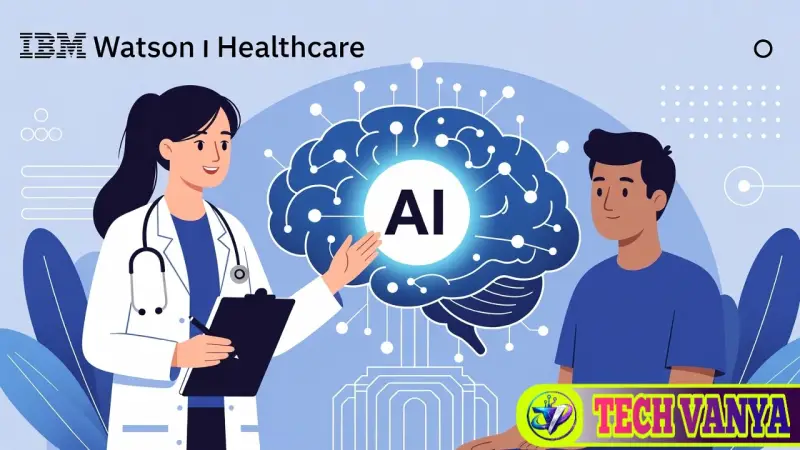
IBM Watson is an advanced artificial intelligence platform developed by IBM that is designed to understand, analyze, and process large amounts of data. In the healthcare industry, IBM Watson is used to assist doctors, hospitals, and medical researchers in making faster and more accurate decisions.
Unlike traditional software, IBM Watson can read medical records, research papers, patient histories, and clinical data to provide intelligent insights. This helps healthcare professionals diagnose diseases earlier, recommend treatments, and improve overall patient care.
How IBM Watson Works in Healthcare
IBM Watson uses a combination of artificial intelligence technologies such as machine learning, natural language processing (NLP), and data analytics. It processes both structured and unstructured medical data to deliver useful insights.
- Data Collection: Watson gathers data from patient records, lab reports, and medical databases.
- Data Analysis: It analyzes symptoms, medical history, and research data using AI algorithms.
- Pattern Recognition: Watson identifies patterns and possible diseases based on similar cases.
- Recommendations: It suggests possible diagnoses and treatment options to doctors.
This process helps doctors make informed decisions, reduces human error, and improves the speed of diagnosis.
Real-World Use Cases of IBM Watson in Healthcare
IBM Watson is already being used in various healthcare applications around the world. These real-world examples show how powerful AI can be in improving medical systems:
- Cancer Diagnosis: Watson helps doctors analyze cancer data and recommend personalized treatment plans.
- Medical Imaging: AI is used to detect diseases in X-rays, MRIs, and CT scans.
- Drug Discovery: Watson accelerates the process of finding new medicines by analyzing research data.
- Clinical Decision Support: Provides doctors with evidence-based suggestions during treatment.
Benefits of IBM Watson AI in Healthcare
IBM Watson brings several advantages to the healthcare industry, making it one of the most powerful AI tools in modern medicine:
- Faster Diagnosis: Reduces the time needed to identify diseases.
- Improved Accuracy: Minimizes human errors in medical decisions.
- Personalized Treatment: Provides tailored treatment plans for patients.
- Better Data Management: Handles large volumes of medical data efficiently.
Overall, IBM Watson is transforming healthcare by making it smarter, faster, and more efficient.
What Does IBM Actually Do? Complete Breakdown (2026)
IBM (International Business Machines) is not just a technology company—it is a global enterprise solutions provider that helps organizations solve complex problems using advanced technologies like artificial intelligence, cloud computing, data analytics, and automation.
In 2026, IBM focuses primarily on helping businesses, healthcare systems, financial institutions, and governments improve their operations through digital transformation. Instead of building consumer apps like many modern tech companies, IBM specializes in enterprise-level solutions that handle large-scale data, security, and infrastructure.
1. Artificial Intelligence (AI Solutions)
IBM develops powerful AI systems such as IBM Watson that help organizations automate processes, analyze data, and make intelligent decisions. In healthcare, AI is used for diagnostics and treatment recommendations, while in business, it helps improve customer support and workflow automation.
IBM’s AI systems are designed to understand human language, process data, and provide actionable insights, making them highly valuable across industries.
2. Cloud Computing and Hybrid Cloud
IBM provides cloud computing services that allow companies to store, manage, and process data online instead of using physical servers. One of IBM’s strongest areas is hybrid cloud, which combines private and public cloud systems.
This helps businesses maintain flexibility, security, and scalability. Companies can run sensitive operations on private servers while using public cloud services for other tasks.
3. Data Analytics and Big Data Processing
IBM helps organizations analyze large amounts of data (Big Data) to extract meaningful insights. These insights are used to improve decision-making, predict trends, and optimize performance.
For example, businesses can analyze customer behavior, while hospitals can analyze patient data to improve diagnosis and treatment outcomes.
4. Healthcare and Medical Technology
In healthcare, IBM plays a major role through AI-powered tools like Watson Health. These tools help doctors diagnose diseases, analyze medical records, and recommend treatments based on real-world data.
IBM’s healthcare solutions are used for cancer research, medical imaging, drug discovery, and patient care optimization.
5. Cybersecurity and Data Protection
IBM provides advanced cybersecurity solutions to protect organizations from cyber threats, hacking attempts, and data breaches. With the increasing importance of digital security, IBM helps companies secure sensitive information and maintain compliance with regulations.
Its security systems monitor threats in real-time and provide automated responses to prevent attacks.
6. Automation and Business Process Optimization
IBM uses AI and automation tools to streamline business operations. This includes automating repetitive tasks, improving workflows, and reducing human effort.
Automation helps companies save time, reduce costs, and increase productivity, making it a key part of modern digital transformation.
7. Consulting and Enterprise Solutions
IBM offers consulting services to help organizations adopt new technologies like AI and cloud computing. Its experts work with businesses to design and implement digital strategies that improve efficiency and competitiveness.
These consulting services are widely used by large enterprises and government organizations worldwide.
8. Financial and Banking Technology
IBM provides solutions for banks and financial institutions, including fraud detection, risk analysis, and secure transaction systems. AI is used to identify suspicious activities and improve financial decision-making.
These technologies help banks operate more securely and efficiently in the digital era.
9. Quantum Computing Research
IBM is one of the leading companies in quantum computing, a next-generation technology that has the potential to solve extremely complex problems much faster than traditional computers.
Although still in development, quantum computing could revolutionize industries like healthcare, finance, and scientific research in the future.
10. Global Infrastructure and Enterprise Support
IBM supports large organizations by providing global IT infrastructure, including servers, storage systems, and enterprise software. These systems are designed to handle massive workloads and ensure reliability.
IBM operates in multiple countries and serves clients across industries, making it a key player in the global technology ecosystem.
Why IBM Matters in 2026
IBM remains important because it focuses on solving real-world problems using advanced technology. Its solutions are used in critical industries such as healthcare, finance, and government operations.
By combining AI, cloud computing, and data analytics, IBM helps organizations become more efficient, intelligent, and future-ready.
Advantages and Limitations of IBM Watson in Healthcare (2026)
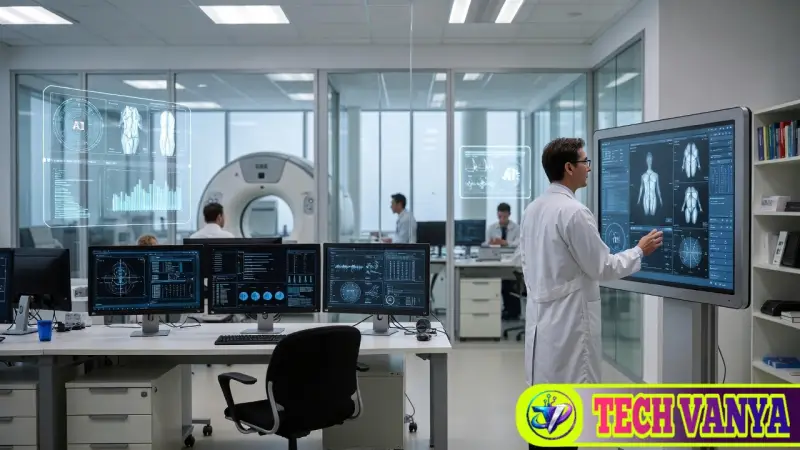
IBM Watson has become one of the most powerful AI systems in healthcare, offering advanced capabilities in diagnostics, data analysis, and decision-making. However, like any technology, it comes with both advantages and limitations. Understanding both sides is essential for evaluating its real impact in the healthcare industry.
Major Advantages of IBM Watson in Healthcare
- 1. Faster Diagnosis: Watson can analyze medical data quickly, helping doctors diagnose diseases in less time.
- 2. Improved Accuracy: AI reduces human error by analyzing large datasets and identifying patterns.
- 3. Personalized Treatment Plans: Provides tailored treatment recommendations based on patient history.
- 4. Data-Driven Decisions: Helps doctors make decisions based on real-time data and research.
- 5. Early Disease Detection: Identifies diseases at early stages, improving survival rates.
- 6. Efficient Data Management: Handles massive medical records efficiently.
- 7. Support for Doctors: Acts as an assistant, not a replacement, improving productivity.
- 8. Advanced Medical Research: Speeds up research by analyzing thousands of medical papers.
- 9. Better Patient Outcomes: Improves treatment quality and recovery rates.
- 10. Automation of Routine Tasks: Reduces workload by automating repetitive processes.
Limitations of IBM Watson in Healthcare
- 11. High Implementation Cost: Expensive for small hospitals and clinics.
- 12. Data Privacy Concerns: Handling sensitive patient data requires strict security measures.
- 13. Dependency on Data Quality: Poor data leads to inaccurate results.
- 14. Limited Human Understanding: AI cannot fully understand human emotions and context.
- 15. Integration Challenges: Difficult to integrate with existing hospital systems.
- 16. Training Required: Medical staff need training to use AI systems effectively.
- 17. Not Fully Autonomous: Still requires human supervision.
- 18. Ethical Concerns: AI decisions raise ethical and legal questions.
- 19. Risk of Over-Reliance: Doctors may depend too much on AI recommendations.
- 20. Continuous Updates Needed: Requires regular updates to stay accurate and relevant.
Overall, IBM Watson is a powerful tool that enhances healthcare systems, but it must be used responsibly. Combining human expertise with AI capabilities creates the best outcomes for patients and medical professionals.
The Future of IBM Watson AI in Healthcare (2026–2030)
IBM Watson AI is expected to play a major role in the future of healthcare as artificial intelligence continues to evolve. Between 2026 and 2030, IBM Watson will become more advanced, accurate, and deeply integrated into medical systems worldwide. Its ability to process massive amounts of healthcare data will help doctors make faster and more informed decisions.
As technology improves, IBM Watson will move beyond just assisting doctors—it will become a critical part of the healthcare ecosystem, helping predict diseases, automate processes, and improve patient outcomes on a global scale.
1. More Accurate AI Diagnostics
IBM Watson will become even more precise in diagnosing diseases by using improved machine learning models and larger datasets. This will reduce errors and increase confidence in AI-based medical decisions.
2. Predictive Healthcare Systems
In the future, Watson will be able to predict diseases before symptoms appear by analyzing patient history, genetics, and lifestyle data. This will shift healthcare from treatment to prevention.
3. Integration with Smart Hospitals
IBM Watson will be integrated into smart hospital systems, where AI will manage patient data, assist doctors in real-time, and optimize hospital operations.
4. Real-Time Patient Monitoring
With the help of wearable devices and IoT technology, Watson will continuously monitor patient health and provide real-time alerts for any abnormalities.
5. Advanced Drug Discovery
IBM Watson will speed up drug discovery by analyzing complex medical research data and identifying potential treatments much faster than traditional methods.
6. AI-Powered Medical Imaging
Future versions of Watson will provide highly accurate analysis of medical images such as X-rays, MRIs, and CT scans, helping detect diseases like cancer at early stages.
7. Global Healthcare Expansion
IBM Watson will make advanced healthcare solutions accessible in developing countries, helping reduce the gap between urban and rural medical services.
8. Personalized Medicine at Scale
AI will enable personalized treatment plans for millions of patients based on their unique medical data, improving treatment effectiveness.
9. Collaboration with Doctors
Instead of replacing doctors, IBM Watson will act as a powerful assistant, helping medical professionals make better and faster decisions.
10. Continuous Learning and Improvement
IBM Watson will continuously learn from new medical data, research, and patient outcomes, making it smarter and more reliable over time.
Overall, the future of IBM Watson AI in healthcare is highly promising. It will not only improve medical diagnostics but also transform the entire healthcare system into a more intelligent, efficient, and patient-focused ecosystem.
How IBM Watson AI Actually Works in Healthcare (Step-by-Step)
To truly understand the power of IBM Watson AI in healthcare, it is important to know how it actually works behind the scenes. IBM Watson is not just a simple software—it is a complex system that combines multiple artificial intelligence technologies to analyze medical data and provide useful insights.
Watson works by processing huge amounts of structured and unstructured data, including medical records, research papers, lab reports, and clinical data. It uses advanced algorithms to understand, learn, and generate recommendations.
Step 1: Data Collection from Multiple Sources
IBM Watson collects data from various sources such as electronic health records (EHR), medical journals, patient history, and diagnostic reports. This data can include text, images, and even voice inputs.
Step 2: Natural Language Processing (NLP)
Watson uses Natural Language Processing (NLP) to understand human language. It can read medical documents, doctor notes, and research papers just like a human, but much faster and more accurately.
Step 3: Machine Learning Analysis
After understanding the data, Watson applies machine learning algorithms to identify patterns and relationships. It compares current patient data with millions of previous cases to find similarities.
Step 4: Clinical Reasoning and Decision Support
Watson evaluates possible diagnoses and treatment options based on available data. It provides evidence-based recommendations to doctors, helping them make better decisions.
Step 5: Continuous Learning
IBM Watson continuously learns from new data, medical research, and real-world outcomes. This allows the system to improve over time and become more accurate and reliable.
Key Technologies Behind IBM Watson
- Natural Language Processing (NLP): Understands medical text and language.
- Machine Learning: Learns from data and improves over time.
- Deep Learning: Analyzes complex patterns in medical data.
- Data Analytics: Processes large volumes of healthcare information.
- Cloud Computing: Stores and manages data securely.
This combination of technologies makes IBM Watson one of the most advanced AI systems in healthcare diagnostics.
How to Use IBM Watson AI for Healthcare (Step-by-Step Guide)
IBM Watson AI is mainly designed for enterprises, healthcare organizations, and professionals. However, understanding how it works step by step can help users, researchers, and developers explore its capabilities effectively.
Step-by-Step Process to Use IBM Watson AI
- Visit the Official IBM Website: Go to the official IBM Cloud or Watson platform website where AI tools and services are available.
- Create an IBM Account: Sign up using your email ID to access IBM Cloud services and Watson AI tools.
- Access IBM Cloud Dashboard: After logging in, navigate to the IBM Cloud dashboard where all services are listed.
- Search for Watson Services: In the services section, search for “Watson AI” or related healthcare AI tools.
- Select a Watson Tool: Choose a specific tool such as Watson Assistant, Watson Discovery, or healthcare-related solutions depending on your needs.
- Set Up Your Project: Create a new project or workspace where you can upload data and configure AI settings.
- Upload Medical Data: Add patient data, research files, or datasets (for testing or analysis purposes).
- Configure AI Models: Customize settings such as language processing, data analysis, and prediction models.
- Run Analysis: Start the AI process to analyze the data and generate insights or recommendations.
- Review Results: Check the output provided by Watson, including diagnosis suggestions, patterns, or reports.
- Integrate with Healthcare Systems: Connect Watson with hospital systems or applications for real-time usage.
- Monitor and Improve: Continuously update data and refine the system to improve accuracy and performance.
Although IBM Watson is primarily built for professionals and organizations, this step-by-step process helps beginners understand how AI systems are used in real-world healthcare environments.
IBM Watson vs Other AI Tools in Healthcare (2026 Comparison)
IBM Watson is one of the most advanced AI platforms used in healthcare, but it is not the only one. Several other AI tools and platforms are also being used for medical diagnostics and data analysis. Understanding how IBM Watson compares with other AI tools helps in identifying its strengths and limitations.
Key Differences Between IBM Watson and Other AI Tools
| Feature | IBM Watson | Other AI Tools |
|---|---|---|
| Purpose | Enterprise-level AI for healthcare and business | Often focused on specific tasks or consumer-level use |
| Data Processing | Handles large-scale medical and enterprise data | Limited or task-specific data handling |
| Accuracy | High accuracy with clinical data support | Varies depending on tool and use case |
| Healthcare Integration | Deep integration with hospital systems | Limited integration in many cases |
| Customization | Highly customizable for enterprise needs | Limited customization options |
| Cost | Expensive (enterprise-level) | Often cheaper or freemium models |
| Ease of Use | Requires training and technical setup | Generally easier for beginners |
| Security | High-level enterprise security | Basic to moderate security |
| Use Case | Hospitals, research, enterprises | General AI tasks, smaller applications |
| Scalability | Highly scalable for large systems | Limited scalability |
Which One is Better?
IBM Watson is best suited for large-scale healthcare systems, hospitals, and enterprises that require advanced AI capabilities and data processing. On the other hand, other AI tools may be more suitable for small businesses or individual use cases where simplicity and cost are important factors.
Choosing the right AI tool depends on the specific needs, budget, and technical requirements of the organization.
Real-World Case Studies of IBM Watson in Healthcare
IBM Watson AI is not just a theoretical technology—it has been used in real-world healthcare systems to improve diagnosis, treatment, and research. These case studies demonstrate how AI is transforming modern medicine and delivering measurable results.
1. Cancer Treatment Assistance
IBM Watson has been used in oncology to help doctors analyze cancer cases and recommend personalized treatment plans. By comparing patient data with global medical research, Watson provides insights that help doctors choose the most effective therapies.
In several hospitals, Watson has helped reduce the time required to identify treatment options, allowing patients to receive faster care.
2. Medical Imaging and Disease Detection
Watson AI has been applied in analyzing medical images such as X-rays, MRIs, and CT scans. It can detect abnormalities that may be difficult for humans to identify, especially in early stages of diseases like cancer and neurological disorders.
This improves diagnostic accuracy and helps doctors make more confident decisions.
3. Drug Discovery and Research
IBM Watson has been used by pharmaceutical companies to accelerate drug discovery. It analyzes vast amounts of research data, clinical trials, and scientific literature to identify potential drug candidates.
This significantly reduces the time and cost required to develop new medicines.
4. Clinical Decision Support Systems
Hospitals have implemented Watson as a clinical decision support system. It assists doctors by providing evidence-based recommendations during diagnosis and treatment.
This ensures that medical decisions are backed by the latest research and data.
5. Patient Data Analysis and Management
IBM Watson helps healthcare providers manage and analyze large volumes of patient data. It organizes information efficiently and highlights important patterns that may otherwise be missed.
This leads to better patient monitoring, improved care, and more efficient hospital operations.
6. Remote Healthcare and Telemedicine
In some regions, Watson has been used to support telemedicine services. It helps doctors diagnose patients remotely by analyzing symptoms and medical data, making healthcare accessible to people in remote areas.
This is especially important in improving global healthcare accessibility.
7. COVID-19 Research and Response
During the COVID-19 pandemic, IBM Watson was used to analyze research data and assist in understanding the virus. It helped researchers process large amounts of information quickly, contributing to faster insights and decision-making.
Impact of These Case Studies
- Faster medical decisions
- Improved diagnostic accuracy
- Reduced healthcare costs
- Better patient outcomes
- Enhanced medical research capabilities
These real-world examples show that IBM Watson AI is already making a significant impact in healthcare, and its role will continue to grow in the future.
What This Means for the Future of Healthcare
The rise of IBM Watson AI in healthcare is not just a technological advancement—it represents a major shift in how medical systems operate. From faster diagnosis to personalized treatments, AI is transforming the way doctors and healthcare professionals approach patient care.
What makes IBM Watson truly powerful is its ability to combine data, intelligence, and real-world insights into one system. It does not replace doctors, but it enhances their capabilities, allowing them to make better and faster decisions.
As we move further into 2026 and beyond, the role of AI in healthcare will only continue to grow. Hospitals, researchers, and medical institutions will increasingly rely on AI systems like Watson to improve efficiency, reduce errors, and deliver better outcomes for patients.
However, it is also important to use AI responsibly. Human expertise, ethical considerations, and data privacy must always remain a priority when implementing advanced technologies in healthcare.
In the end, the combination of human intelligence and artificial intelligence has the potential to create a smarter, more efficient, and more accessible healthcare system for everyone.